
Best Time to Pour Concrete in Suwanee GA: A Seasonal Guide
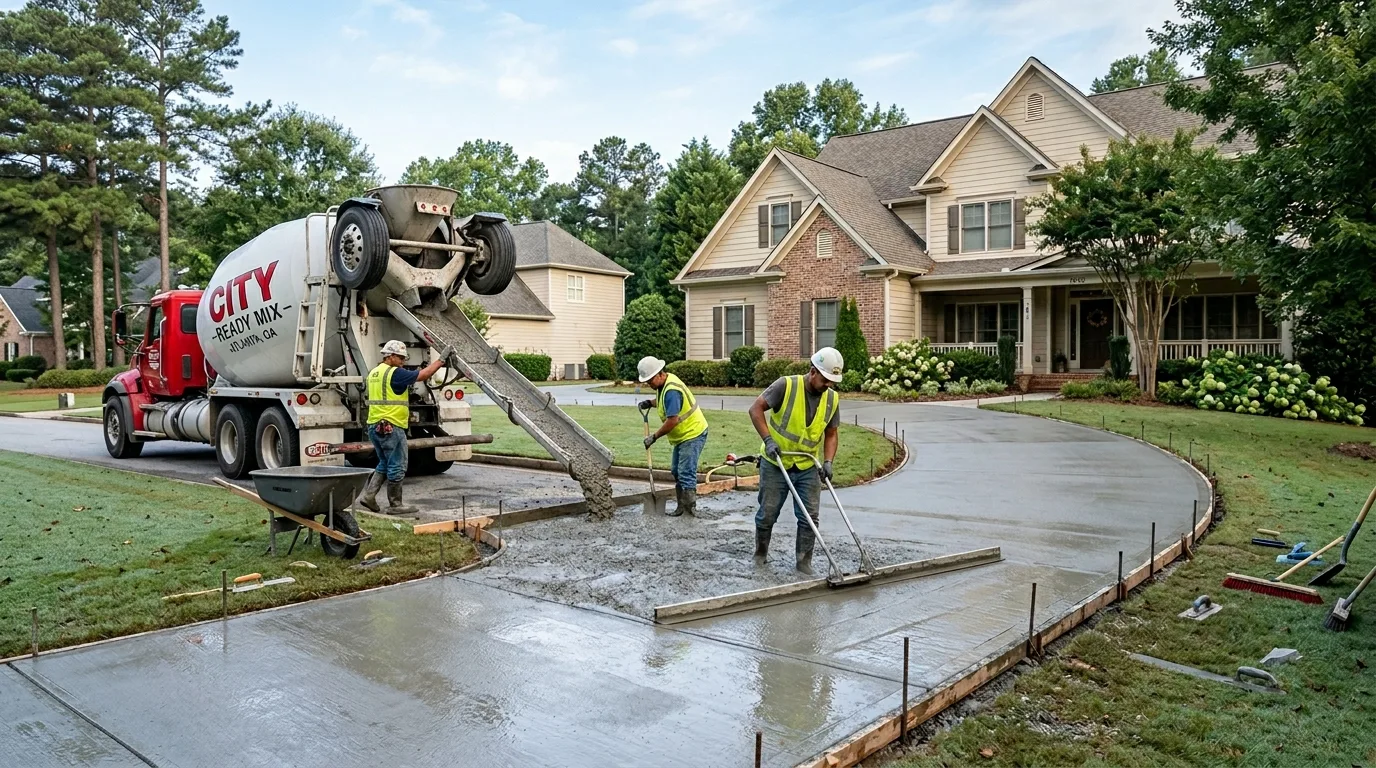
Timing matters more for concrete than most homeowners realize. Pour concrete in the wrong conditions and you risk surface cracking, poor strength development, and a slab that looks and performs like it aged ten years in its first season. In Suwanee, GA, the best concrete projects happen in spring and fall — but every season is workable with the right approach. This guide breaks down what each season means for concrete work in Suwanee and gives you a month-by-month picture of what to expect.
In this post, we cover: seasonal curing conditions in Suwanee, month-by-month recommendations, summer heat management, and winter freeze risk management.
Ready to Schedule Your Concrete Project in Suwanee?
We work in all seasons with the right admixtures and scheduling. Free estimates — call (888) 376-0955.
Why Concrete Curing Conditions Matter in Suwanee
Concrete doesn’t “dry” — it cures through a chemical reaction called hydration, where water combines with cement particles to form a hardened crystalline structure. This reaction needs to proceed at the right rate: too fast (from heat or wind) and the surface loses moisture before it gains strength, leading to surface cracking. Too slow (from cold temperatures) and the reaction stalls, leaving concrete with lower-than-designed strength.
Suwanee’s humid subtropical climate creates both problems across the year. Summer (June through August) brings 88–89°F highs with dew points above 65°F — conditions where rapid evaporation from the concrete surface is a real risk, especially in direct sun. Winter (December through February) brings overnight lows that regularly approach 32°F, creating freeze risk for fresh concrete that hasn’t completed hydration. Both extremes are manageable — but only if the contractor knows Suwanee’s specific conditions and adjusts accordingly.
The clay-heavy soil under Suwanee’s subdivisions also plays a role. The Gwinnett County red clay that underlies neighborhoods from Riverbrooke to Laurel Springs holds moisture and releases it slowly, affecting the subgrade moisture environment that fresh concrete sits on. A well-prepared stone base insulates the concrete from the soil’s moisture effects, but the interaction is still relevant when scheduling pours in very wet or very dry conditions.
Month-by-Month Guide for Suwanee
January (avg high 50°F / low 30°F): High freeze risk. Overnight temperatures in Suwanee regularly drop to or below 32°F. Fresh concrete should not be poured when freezing temperatures are expected within 24 hours. If work must proceed, heated enclosures and insulating blankets are required. Most large pours are better rescheduled. Small patches and crack fills can be done on warmer days.
February (avg high 55°F / low 33°F): Still risky but improving. Freeze nights become less frequent by late February. Late-month opportunities for favorable pour windows start to appear. Same precautions as January apply.
March (avg high 63°F / low 41°F): Good. Temperatures moderate, freeze risk drops significantly. March is a solid month for concrete work in Suwanee, though late cold fronts can bring overnight temperatures near freezing. Monitoring forecasts 48–72 hours ahead is standard practice.
April (avg high 72°F / low 50°F): Excellent. April is one of the two best months of the year for concrete work in Suwanee. Temperatures in the 65–72°F range, moderate humidity, and consistent afternoon highs create near-ideal curing conditions. Projects poured in April consistently produce the best results.
May (avg high 79°F / low 58°F): Excellent. Similar to April, with slightly warmer temperatures that are still well within the optimal curing range. Some late-spring rain can affect scheduling, but dry days are frequent and temperatures are ideal.
June (avg high 86°F / low 67°F): Challenging. Heat and humidity escalate in June. Concrete set time accelerates significantly, which reduces the working time for finishing and stamping. Early morning pours (6–7 AM starts), hydration stabilizers to slow the set, and wet curing blankets become standard. Still fully workable with experienced crews who know how to manage Suwanee’s summer concrete.
July (avg high 89°F / low 71°F): Most challenging. Peak heat and humidity. The window between placement and final set can be as short as 1–2 hours in direct sun. Evaporation retarders, consistent wetting, and shading are required. Project scheduling often shifts to early morning pours on the hottest days.
August (avg high 89°F / low 71°F): Same as July. Peak summer conditions persist. Concrete can absolutely be poured — a large share of Suwanee’s projects happen in summer — but it requires experienced management of the pour process from start to finish.
September (avg high 82°F / low 65°F): Good and improving. Temperatures moderate from August’s peak, humidity begins to drop, and comfortable curing conditions return by late September. This is the start of the fall window.
October (avg high 72°F / low 54°F): Excellent. October is the other of the two best months for concrete in Suwanee. Temperatures in the 65–72°F range, lower humidity, and stable conditions make October ideal for large driveway and patio projects. Scheduling tends to be tighter because demand peaks in spring and fall.
November (avg high 62°F / low 42°F): Good. Temperatures remain workable through most of November. Freeze risk begins to appear in late November when overnight lows approach 40°F, but daytime temperatures are still suitable for pours. Projects started in October and into early November consistently cure well.
December (avg high 52°F / low 33°F): Risky. Similar to February — occasional good windows on warmer days, but freeze risk returns. Most major pours are better completed before December or deferred to March.
Spring and Fall Are Prime Concrete Season in Suwanee
Schedule your driveway, patio, or walkway project during the optimal window. Call (888) 376-0955 for availability.
Summer Concrete Tips for Suwanee
Summer concrete work in Suwanee, GA is common — the construction season doesn’t stop because it’s hot. The adjustments that make summer pours work:
Start early. Most summer pours in Suwanee begin at 6–7 AM to take advantage of cooler morning temperatures before the full heat of the day arrives. By late morning, surface temperatures on a concrete slab can exceed ambient air temperature by 20°F, dramatically accelerating moisture loss.
Use hydration stabilizers. These admixtures slow the rate of hydration without changing the final strength, giving crews more working time in Georgia’s heat. They’re standard for stamped concrete and large pours in summer.
Wet curing blankets and evaporation retarders. Applied after finishing, these tools prevent rapid surface moisture loss. Synthetic burlap wet blankets keep the concrete surface moist for the critical first 24–72 hours.
Smaller pour sections. Breaking large pours into sections manages the working time more reliably in heat. Each section can be finished before it sets too hard.
Winter Concrete Precautions for Suwanee
Suwanee averages only 6–10 days per year where temperatures drop below 32°F, which is relatively mild compared to northern Georgia markets. But those days matter for fresh concrete. The precautions:
Monitor 72-hour forecasts. Schedule pours when the 72-hour forecast shows overnight lows staying above 40°F. A buffer above freezing protects against forecast errors.
Insulating blankets. For pours completed when overnight temperatures approach 40°F, insulating curing blankets trap heat from the hydration reaction and keep the concrete above freezing until it gains sufficient strength.
Accelerating admixtures. Calcium chloride and non-chloride accelerators speed the hydration reaction, allowing the concrete to gain strength faster and become less vulnerable to freeze damage. Used selectively for winter pours.
Frequently Asked Questions
Can concrete be poured in Suwanee in the summer?
Yes — summer concrete work is done routinely in Suwanee with proper admixtures, early morning scheduling, and curing protection. The adjustments add some cost and require experienced crews, but summer projects consistently produce quality results when managed correctly.
What months are best for concrete work in Suwanee?
April, May, September, and October are the optimal months for concrete work in Suwanee. These months offer temperatures in the 65–79°F range with moderate humidity — the conditions that produce the best curing outcomes with the fewest complications.
How does Suwanee’s clay soil affect concrete scheduling?
The Gwinnett County clay soil holds moisture and can extend subgrade drying time after heavy rain. Projects that follow significant rain events may need to wait for the subgrade to reach proper compaction moisture before pouring. This is less of a factor with properly prepared stone bases, which drain more quickly than raw clay.
Schedule Your Concrete Project in the Right Season
Suwanee Concrete Pros schedules projects to match Suwanee's climate windows. Free estimates — (888) 376-0955.
Related: