
How to Maintain Your Concrete Driveway in Georgia's Climate
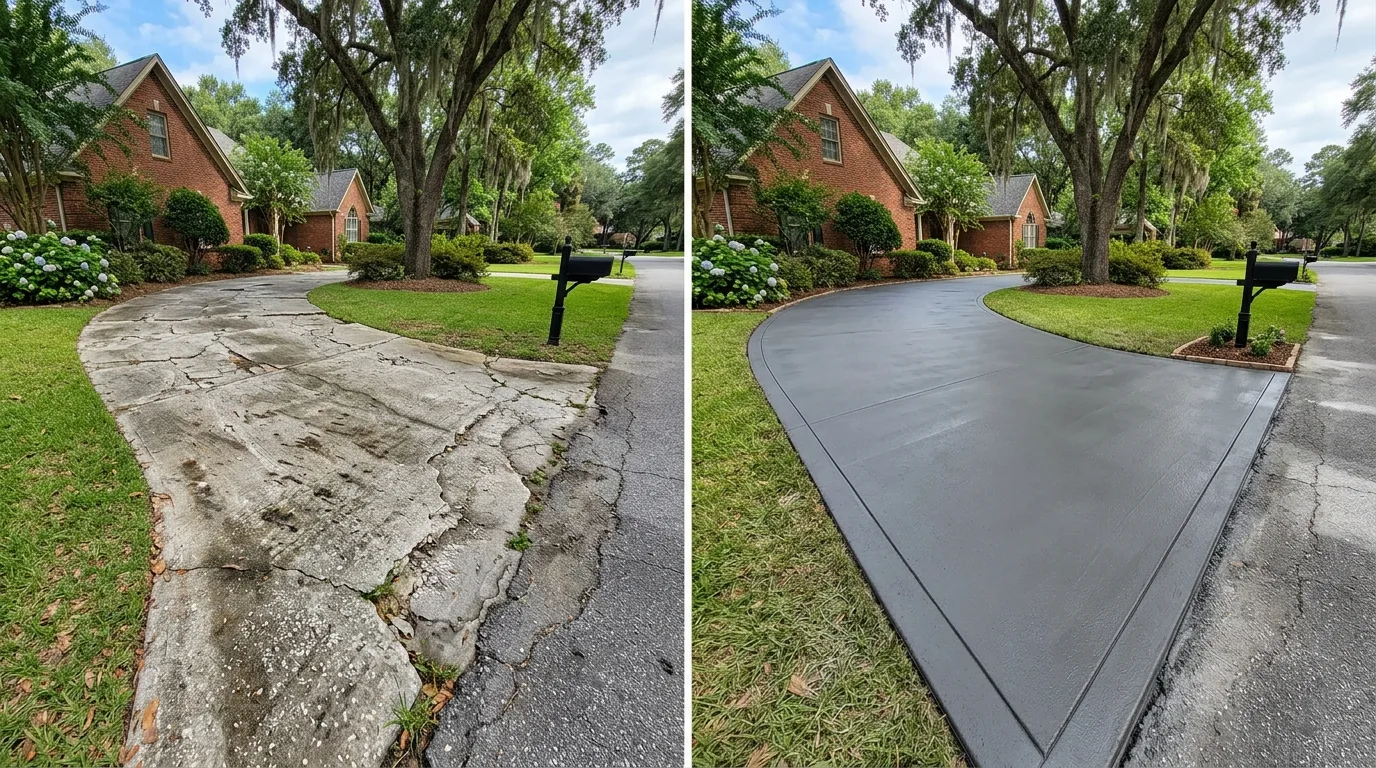
A properly maintained concrete driveway in Georgia can last 30–50 years. Skip the maintenance, and you may be looking at costly repairs — or full replacement — within 15. Suwanee’s combination of Georgia summer heat, periodic winter freeze nights, and Gwinnett County’s clay soil creates a specific maintenance environment that requires understanding what causes damage and when to address it. This guide gives you a practical maintenance calendar and the key things to watch for on any concrete driveway in the Suwanee area.
In this post, we cover: the annual maintenance calendar for Suwanee concrete, sealing schedule and product selection, crack management, winter care, and the clay soil factors that affect what you need to monitor.
Concrete Driveway Maintenance Questions? We Can Help.
Assessment, sealing recommendations, and crack repair in Suwanee. Free estimates — call (888) 376-0955.
Why Maintenance Matters More in Georgia Than in Many Other States
Georgia’s climate creates three overlapping stressors for concrete driveways that don’t exist in milder climates:
UV exposure: Suwanee’s latitude and long summer season mean significant cumulative UV exposure on unprotected concrete. UV radiation breaks down the cement paste matrix, causing surface dusting, color fading (on colored or stamped concrete), and increased porosity that allows water deeper into the slab. Sealing the surface is the primary protection against UV damage.
Moisture cycling: Georgia’s 55 inches of annual rainfall — heavy spring and summer rain events interspersed with summer dry spells — creates constant wet-dry cycling in the concrete and the soil beneath it. The clay soil in neighborhoods throughout Gwinnett County amplifies this effect: saturated clay expands, dry clay shrinks, and the concrete is stressed by the soil movement through every cycle.
Freeze-thaw cycles: Suwanee’s winters are mild compared to northern markets, but the area does experience nights below 32°F, most commonly from December through February. Water that has infiltrated surface cracks or a porous concrete surface can freeze and expand, widening cracks and causing surface scaling. This risk is greater on driveways that haven’t been sealed, because water infiltration is what triggers freeze-thaw damage.
The good news: all three stressors are manageable with routine maintenance that takes minimal time and costs far less than a repair or replacement.
The Annual Maintenance Calendar for Suwanee Driveways
Spring (March–April): Winter inspection. Walk the driveway after the freeze season ends and look for new cracking, surface scaling at edges, and any sections that show differential settlement from clay movement over the winter. Spring is the time to address any new damage before summer rain events drive water deeper into existing cracks.
Late spring/early summer (May–June): Seal application window (if due). Sealing is most effective when the concrete surface temperature is between 50–90°F and the surface is completely dry. Late May or early June in Suwanee provides the combination of warm but not extreme temperatures and typically enough dry days to allow the driveway to dry thoroughly before sealing. Apply sealer on a day with no rain forecast for 24–48 hours.
Summer (July–August): Monitor for developing damage. Summer heat in Suwanee causes the clay beneath driveways to dry and contract, which creates void conditions that allow slabs to flex. Inspect edges and control joints — these are the first places clay movement shows up as new cracking.
Fall (September–November): Second prime maintenance window. Same conditions as spring — moderate temperatures, lower humidity, ideal for any concrete repair work like crack filling before the freeze season begins. Crack filling in October is one of the highest-return maintenance investments you can make: a crack that costs $200 to fill in fall costs $1,500+ to properly repair after two winters of freeze-thaw damage.
Winter (December–February): Protect the surface. Avoid deicing salt on concrete driveways — salt causes surface scaling that accelerates deterioration. Use sand or cat litter for traction. Keep the surface cleared of standing water when freeze temperatures are forecast.
Sealing Schedule and Product Selection
How often: Seal concrete driveways in Suwanee every 3–5 years. Driveways that receive heavy traffic, are exposed to direct sun throughout the day, or are in neighborhoods with active clay movement may benefit from a 3-year cycle. A simple test: pour water on the driveway surface. If it beads up, the sealer is still effective. If it soaks in immediately, resealing is due.
Product type: For Suwanee’s conditions, film-forming acrylic sealers with UV inhibitors are the standard choice for plain concrete driveways. Penetrating silane or siloxane sealers offer different protection — they penetrate the concrete rather than coating the surface, providing excellent water repellency without changing the appearance. For stamped concrete driveways, acrylic or polyurethane sealers that protect the color finish are required. Avoid water-based sealers for heavy-use driveways; solvent-based formulas provide better durability in Georgia’s temperature extremes.
Application: Clean the surface thoroughly — pressure washing to remove dirt, oil stains, and old sealer residue — and allow the driveway to dry completely (24–48 hours minimum) before applying new sealer. Apply thin, even coats rather than one thick coat, which can trap moisture and cause peeling.
Professional Concrete Sealing and Crack Repair in Suwanee
We handle driveway maintenance, crack fills, and resurfacing for Suwanee homeowners. Call (888) 376-0955.
Types and Options for Crack Management
Hairline cracks (under 1/8 inch): Cosmetic. Monitor them — photograph and measure them at least once per year. Apply a penetrating concrete sealer annually to keep water out of the crack while you monitor its development. These do not require immediate repair but should be watched.
Moderate cracks (1/8 to 1/4 inch): Fill with polyurethane concrete caulk or epoxy crack filler. Route the crack slightly wider and cleaner before filling to improve bond. Done correctly, crack fills last 5–10 years. Do this before fall freeze season.
Structural cracks (over 1/4 inch or growing): These require professional assessment. A crack wider than 1/4 inch or one that continues to grow indicates structural movement — either clay soil settlement beneath the slab or inadequate base depth. Filling these without addressing the cause provides only temporary relief. See our concrete repair page for full guidance.
Practical Uses of Regular Maintenance for Suwanee Homeowners
Neighborhood resale value: Well-maintained concrete driveways in Suwanee’s established neighborhoods like Laurel Springs and Suwanee Station make a strong first impression during home sales. A sealed, crack-free driveway signals attentive homeownership to buyers and appraisers.
Preventing clay soil damage escalation: Regular crack fills prevent water from reaching the clay subgrade through cracks — the water infiltration that triggers clay swelling cycles, which in turn widen cracks further. This cycle is the leading cause of premature driveway failure in Gwinnett County. Maintenance breaks the cycle early.
Protecting stamped concrete appearance: For stamped driveways and patios, regular resealing is the only way to maintain the color depth and pattern clarity. A stamped concrete surface that hasn’t been resealed in 7+ years will look dramatically faded compared to its original appearance. Resealing typically restores the color without full replacement.
Frequently Asked Questions
How do I know when my Suwanee concrete driveway needs sealing?
Pour water on the surface. If it beads up and runs off, the sealer is still working. If it soaks in within 30 seconds, resealing is due. Visual signs include surface dusting, color fading on colored or stamped concrete, and increased surface roughness compared to when the driveway was new.
Can I seal a concrete driveway in Suwanee’s summer heat?
Yes, but timing matters. Avoid sealing in direct midday sun during July–August — the surface temperature may exceed 90°F, causing solvent-based sealers to flash too quickly before they penetrate properly. Early morning applications (before 9 AM) on overcast days work well in summer. Late spring (May–early June) and fall (September–October) are the optimal sealing seasons.
How long does concrete crack repair last in Georgia?
Properly filled cracks in Suwanee’s climate last 5–10 years when the underlying cause (drainage or clay movement) has been addressed. Crack fills done without resolving the root cause typically last 1–3 seasons before the crack re-opens. See our guidance on when concrete repair makes sense vs. replacement to assess your situation.
Keep Your Suwanee Concrete Driveway in Peak Condition
From sealing to crack repair — Suwanee Concrete Pros handles all concrete maintenance. Free estimates — (888) 376-0955.
Related: