
Concrete Walkway Ideas for Suwanee Homes: Designs That Work
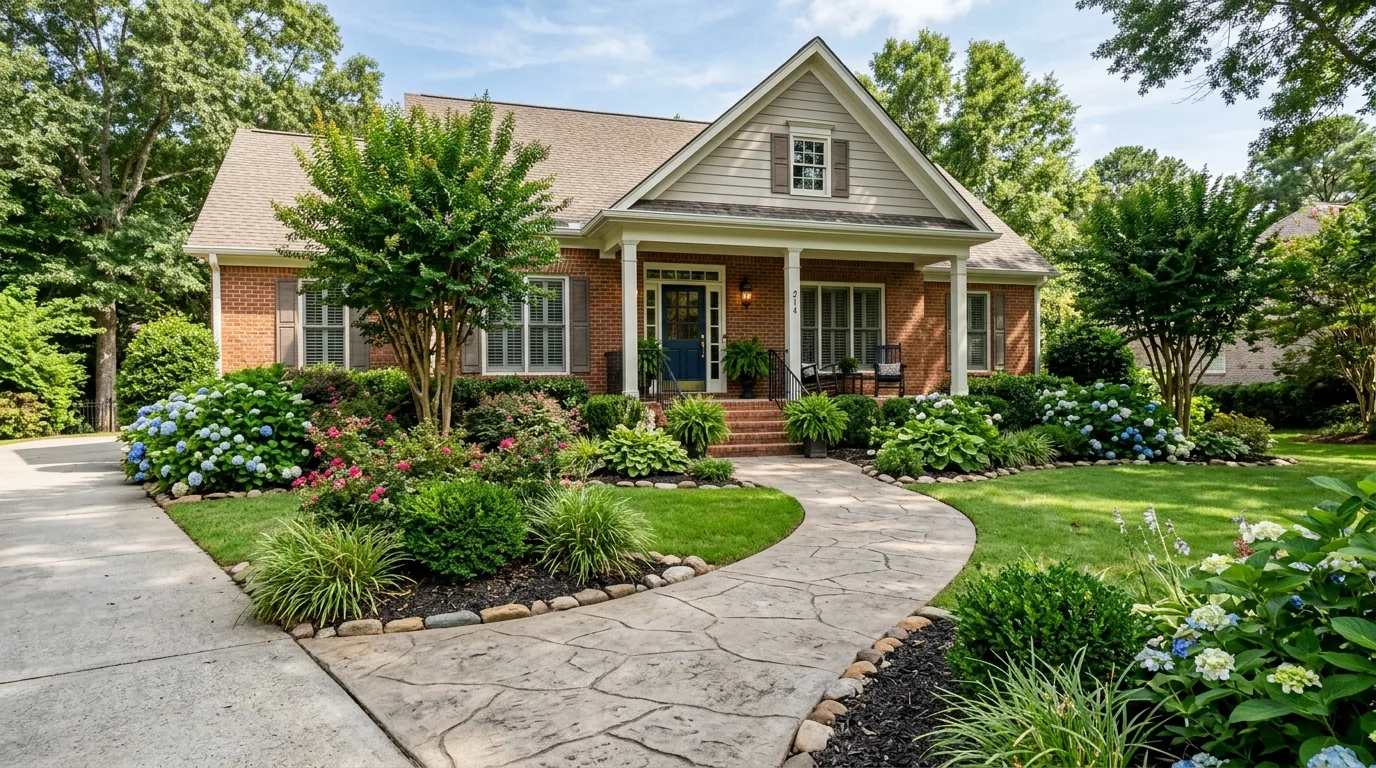
A well-designed concrete walkway does three things at once: it connects the functional elements of your property, it defines the landscape layout visually, and it sets the tone for how your home presents from the street. In Suwanee, where tree coverage, sloped lots, and Gwinnett County’s clay soil create site-specific challenges, the design choices for a concrete walkway matter more than in flatter, sandier markets. This guide walks through the design approaches that work well in Suwanee’s landscape character and the practical considerations that should shape your choices.
In this post, we cover: design styles for Suwanee homes, finish and texture options, layout considerations for sloped lots and tree-heavy landscapes, cost ranges, and the key practical questions to resolve before installation.
Concrete Walkway Design Consultation in Suwanee — Free
We'll walk your site and discuss design options that work with your landscape. Call (888) 376-0955.
Why Walkway Design Matters in Suwanee’s Landscape Context
Suwanee is known for its green character — the Suwanee Creek Greenway, mature tree canopies in established neighborhoods, and the lush landscaping that comes with Georgia’s growing season. A concrete walkway that ignores the landscape context — cutting straight lines through a naturally flowing yard, clashing with existing hardscape, or creating awkward transitions at grade changes — looks out of place even when it’s technically well-installed.
The best walkway designs for Suwanee homes work with the existing terrain rather than fighting it. That typically means gentle curves that follow natural grade transitions, finishes that reference the home’s architecture and surrounding landscape materials, and widths that accommodate how the path will actually be used — a front entry walk needs different width than a side yard maintenance path.
The clay soil factor shapes practical design too. Tree roots in Suwanee’s established neighborhoods like River Glen and Brushy Creek grow aggressively toward the surface, and routing a walkway directly over root zones will eventually cause heaving. A site walk before finalizing the design layout identifies root zones and lets you route the path around them — a detail that can save you from a heaved walkway in five years.
Design Styles for Suwanee Homes
Classic straight broom finish: The simplest and most cost-effective option. A 3–4 foot wide broom-finish walk with clean edges and consistent width works for any home style. The transverse broom lines provide good slip resistance in Georgia’s rain. Works especially well for side yard paths and maintenance access routes where function outweighs aesthetics.
Curved entry walk with stamped finish: The front entry walk from driveway to door is the highest-visibility walkway on the property. A gentle curve that accommodates the natural grade and planting layout, finished in a stamped pattern (ashlar slate, flagstone, or cobblestone), creates an entrance that coordinates with the home’s architecture. This approach is popular in Suwanee’s established subdivisions and in the Laurel Springs area where property aesthetics are a priority.
Exposed aggregate path: Exposed aggregate in neutral tones — tan, buff, mixed river stone — creates a textured, natural-looking walkway that complements Georgia’s landscape character. Less formal than stamped concrete, works well for garden paths and connections between outdoor living areas. The exposed aggregate texture provides good traction and feels comfortable underfoot.
Stepping stone-style scored concrete: Concrete poured as a continuous slab but scored with deep saw cuts to create the visual appearance of individual stepping stones. Achieves the look of flagstone without the joints and the weed growth that come with actual stone. The scored pattern allows subtle coloring variations with color wash or stain applied after the concrete cures.
Boardwalk-pattern stamped concrete: A wood plank pattern stamped into concrete is increasingly popular for Suwanee properties with covered outdoor rooms and pergola areas. The wood look fits Georgia’s landscape character and transitions naturally from wooden deck areas to outdoor concrete spaces. Requires anti-slip sealer for wet conditions.
Layout Considerations for Suwanee Properties
Grading and drainage: Every walkway must slope away from the home at a minimum of 1% (1/8 inch per foot) and ideally 2%. This prevents water from channeling toward the foundation along the walkway edges. On sloped Suwanee lots, grading the walkway properly requires careful excavation and sometimes step-down transitions where grade changes are significant.
Tree root zones: The mature trees in neighborhoods like Riverbrooke and Brushy Creek often have surface roots within 20–30 feet of the trunk. Routing the walkway through a root zone will eventually cause the roots to grow beneath the concrete and heave it. A site walk that identifies root zones and adjusts the layout accordingly is worth the extra planning time.
Width standards: Entry walks: 3–5 feet (wider is better for pairs walking side by side). Side yard utility paths: 2.5–3 feet. Garden paths: 2–3 feet. Where the walkway connects to a patio or gathering area, widening to 4–5 feet creates a more welcoming transition.
Connection to existing hardscape: A new walkway that connects to an existing driveway or patio should match the existing material where possible, or create a deliberate design transition if the materials are different. Mismatched edges or awkward transitions between surfaces are one of the most common design missteps on Suwanee hardscape projects.
Design Your Suwanee Walkway Right the First Time
We walk every site before designing — no guesswork. Free estimates throughout Gwinnett County. Call (888) 376-0955.
Cost Ranges for Concrete Walkways in Suwanee
Standard concrete walkways in Suwanee average approximately $5.78 per square foot installed. Typical project cost ranges:
- Simple straight broom-finish path (40 linear ft × 3 ft = 120 sq ft): $694
- Curved entry walk (60 linear ft × 4 ft = 240 sq ft, broom finish): $1,387
- Stamped stone entry walk (same dimensions): $2,160–$2,500
- Long connecting walkway with turns (100 linear ft × 3 ft = 300 sq ft): $1,734–$2,600 depending on finish
These ranges reflect standard Suwanee and Gwinnett County market pricing. Tree root removal, extra excavation for grade changes, and decorative finish upgrades add cost.
Practical Uses Worth Considering for Suwanee Properties
Entry walk replacement: Many Suwanee homes have original entry walks that were poured in the 1990s–2000s without adequate base preparation. If your entry walk has cracked sections or heaved areas, replacement with proper subgrade preparation is often more economical over a 20-year period than repeated repairs.
Side yard access path: A clean concrete path along the side of the house protects the lawn from wear patterns, keeps foot traffic off clay soil that compacts when wet, and provides easy access to backyard gates and utility areas.
Garden and landscape paths: Narrower paths (2–3 feet) with an exposed aggregate or scored-stone finish create defined garden circulation that improves both function and the visual layout of Suwanee’s landscape-forward yards.
Connecting patio to garage or driveway: A concrete walkway connecting a backyard patio to the garage pad or driveway eliminates the muddy path that inevitably forms across the lawn between these areas during Georgia’s rainy spring.
Frequently Asked Questions
What’s the best walkway width for a Suwanee front entry?
For a front entry walk, 4 feet is the practical minimum for comfortable two-person width. Wider (5 feet) creates a more welcoming entry and is especially appropriate for homes with larger entries or prominent covered porches, which are common in Suwanee’s traditional-style subdivisions.
How do I prevent tree roots from heaving my Suwanee walkway?
Route the walkway to avoid existing tree root zones where possible — usually within 15–20 feet of mature trees in Gwinnett County. Where avoidance isn’t possible, install root barriers (polypropylene sheets that redirect roots downward) during base preparation. For trees that are already present along a planned walkway route, a site assessment identifies which trees have active surface roots that pose a risk.
Can a concrete walkway be removed and replaced if it heaves?
Yes — section-by-section replacement of a heaved walkway is fully feasible. The damaged sections are saw-cut, removed, and the underlying cause (usually tree root intrusion or clay settlement) is addressed before new concrete is poured. See our concrete repair page for details on walkway repair options.
Beautiful, Functional Concrete Walkways in Suwanee
Designed for your specific lot, soil conditions, and home style. Free estimates — (888) 376-0955.
Related: