
Concrete Foundation Repair in Suwanee GA: What to Expect
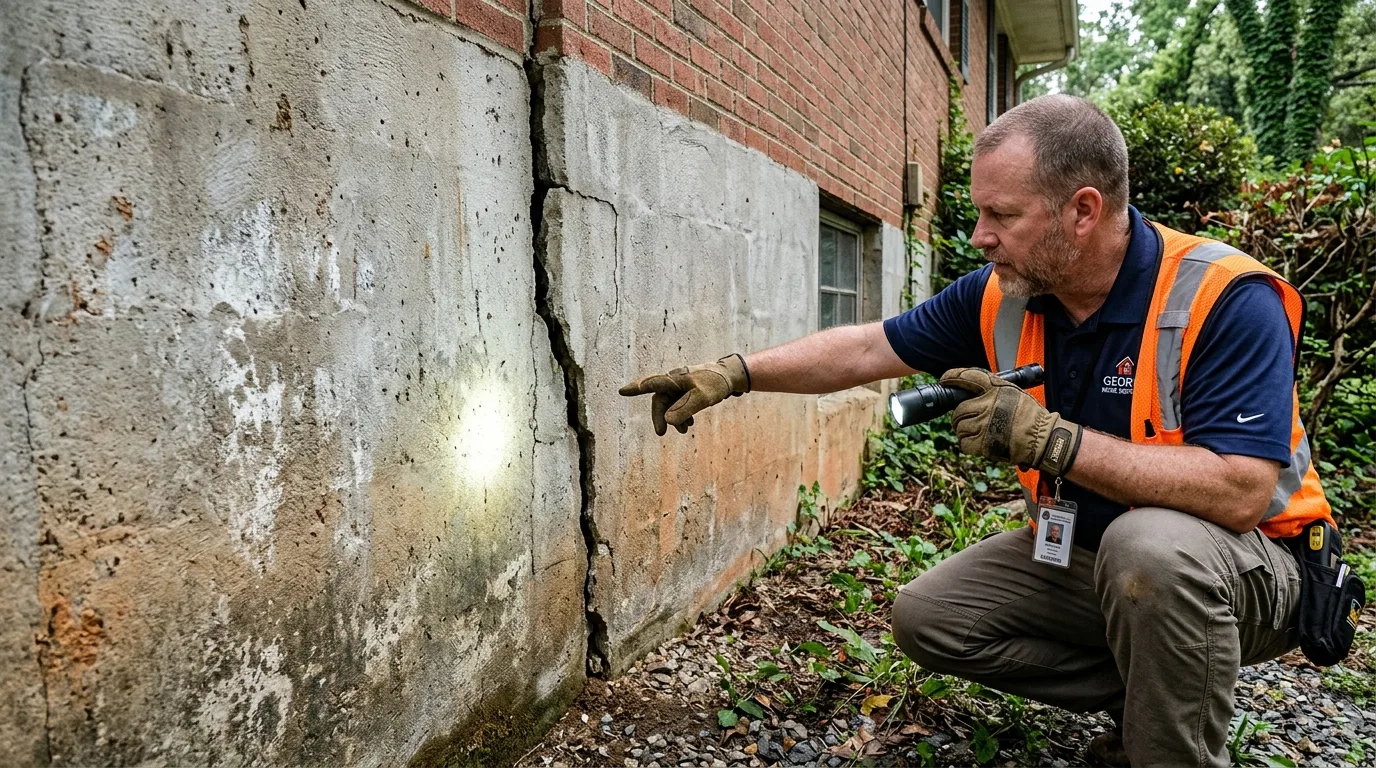
Foundation damage is the concrete problem Suwanee homeowners fear most — and with good reason. A compromised foundation affects every structural element above it, and the repair options range from straightforward crack sealing to complex underpinning that costs tens of thousands of dollars. What separates a manageable repair from a major structural project often comes down to whether the underlying cause — almost always Gwinnett County’s expansive clay soil combined with drainage issues — was caught early or allowed to progress. This guide explains what causes foundation damage in Suwanee, what the repair options involve, and what homeowners should expect in terms of cost and process.
In this post, we cover: causes of foundation damage in Suwanee, types of repair approaches, cost ranges, the role of Gwinnett County clay soil, and when to get a professional assessment.
Foundation Repair Assessment in Suwanee — Free
We assess foundation damage honestly and recommend the right repair approach. Call (888) 376-0955.
What Causes Foundation Damage in Suwanee
Foundation damage in Suwanee is almost always traceable to one or more of the following causes, all of which relate to the same underlying condition: water and clay soil movement beneath the slab.
Expansive clay soil movement: The Gwinnett soil series underlying most of Suwanee’s residential neighborhoods swells with moisture and shrinks when it dries. This seasonal movement creates differential pressure beneath foundation slabs — sections where the soil is wetter heave up; sections where it’s drier sink. Over multiple seasons, this differential movement cracks concrete slabs in characteristic patterns: diagonal cracks from corners (differential uplift), interior floor cracks following the direction of maximum stress, and perimeter cracks where the edge meets the soil directly.
Poor drainage around the foundation: Water that pools against the foundation perimeter keeps the clay perpetually saturated on one side while it dries on the other, maximizing differential movement. This is common on older Suwanee properties in neighborhoods like Suwanee Station and River Glen where original grading has settled over the years, allowing water to pond near the foundation instead of draining away.
Tree roots: Mature tree roots extract moisture from the clay soil beneath foundations, creating localized dry zones that cause the clay to shrink and pull away. The asymmetric soil desiccation from root activity is one of the most common causes of diagonal foundation cracking in Suwanee’s tree-heavy residential neighborhoods.
Inadequate original construction: Homes built in the 1980s and 1990s in Gwinnett County were sometimes constructed with foundation slabs that lacked the reinforcement, post-tension cables, or stone base depth that current engineering standards recommend for expansive clay. These foundations are more susceptible to movement damage as the clay cycles over decades.
Types of Foundation Repair for Suwanee Properties
Crack injection and sealing: For cracks that are stable (not actively growing), epoxy or polyurethane injection fills the crack and restores structural continuity. This is the appropriate repair for isolated cracks in otherwise sound foundations. It does not address the underlying cause — drainage correction or root management must accompany crack repair for long-term success.
Slab leveling (mudjacking): Pumping cement grout or polyurethane foam beneath settled foundation sections through drilled holes lifts them back toward original elevation. Works best on relatively minor settlement (1–2 inches) where the surrounding slab is sound. Gwinnett County clay foundations that have settled significantly may require additional drainage work before or after mudjacking to prevent re-settlement.
Concrete section replacement: Sections of foundation slab that have cracked through the full depth, settled beyond the range of mudjacking, or have failed sub-base material beneath them may require removal and replacement. The new section is poured with appropriate reinforcement and a proper stone base, addressing the root conditions that caused the original failure.
Post-tension re-tensioning or repair: Post-tension slabs use high-strength steel cables tensioned after the pour to compress the concrete and resist clay uplift forces. When a cable breaks or a tendon pocket fails, the affected section loses its designed resistance. Repair involves accessing the cable, splicing or replacing the damaged segment, and re-tensioning. This is specialized structural work requiring licensed concrete and post-tension contractors.
Drainage correction: Not a repair type in itself, but a prerequisite for any foundation repair to last in Suwanee. Correcting drainage — regrading the perimeter, installing French drains or curtain drains, repairing downspout extensions — addresses the water accumulation that drives clay movement. A crack fill done without drainage correction is likely to re-open within 2–3 years on an active clay site.
Foundation Crack Repair and Drainage Assessment in Suwanee
We diagnose the root cause before recommending any repair. Free estimates — (888) 376-0955.
Cost Ranges for Foundation Repair in Suwanee
Foundation repair costs in Suwanee and Gwinnett County vary widely based on damage extent and repair type:
- Crack injection (isolated cracks): $300–$1,500 per crack depending on length and accessibility
- Mudjacking (slab leveling): $4.66 per square foot (Georgia average); most residential projects run $800–$3,500
- Section replacement (small area): $1,200–$4,000 for a typical residential section replacement
- Drainage correction: $1,000–$8,000 depending on complexity (French drain vs. simple regrading)
- Post-tension repair: Highly variable; $1,500–$8,000+ depending on access and extent
Full foundation replacement is the most expensive option — typically $5–$10 per square foot for slab-on-grade, with most residential foundations running $15,000–$40,000 for full replacement. This is necessary only in extreme cases.
Most foundation damage in Suwanee is caught at the crack injection or mudjacking stage when addressed promptly, keeping repair costs in the $1,500–$5,000 range. The key is not delaying assessment once signs of foundation movement appear.
How Clay Soil Makes Foundation Repair Different in Suwanee vs. Other Markets
Foundation repair in sandy soil markets (coastal Georgia, much of South Carolina) focuses primarily on water table management and organic layer settlement. In Suwanee and Gwinnett County, the expansive clay creates a different dynamic: the soil itself generates movement forces that most repair approaches don’t counteract directly.
This is why drainage correction is so critical in Suwanee foundation repair. Reducing the moisture variation around the foundation — keeping the clay at a more consistent moisture level rather than swinging from saturated to desiccated — is the most effective long-term protection against clay movement damage. Post-tension slabs and well-engineered stone bases provide structural resistance to clay forces, but drainage that keeps the clay moisture stable over time is the first line of defense.
Homeowners in Gwinnett County’s established neighborhoods should treat foundation crack monitoring as an annual task — the same way they treat HVAC maintenance or gutter cleaning. Early detection of new cracking saves thousands of dollars in repair costs by catching movement before it progresses.
Frequently Asked Questions
How do I know if my foundation crack is structural or cosmetic?
Hairline cracks (under 1/16 inch) in a foundation slab are generally cosmetic — normal concrete shrinkage. Cracks wider than 1/8 inch, cracks that have grown in width over time, stair-step cracks at the perimeter, and cracks that cause doors or windows to stick are structural warning signs. A professional assessment determines whether the crack is stable or actively progressing.
Do I need a permit for foundation repair in Suwanee?
Surface repairs like crack injection and mudjacking typically don’t require a Gwinnett County permit. Full section replacement, structural repairs to post-tension systems, and any work that modifies the foundation’s structural design require a building permit and may require a licensed structural engineer’s involvement.
How long does foundation crack repair last in Georgia?
Crack repairs done with root cause correction (drainage improvement) last 10–20+ years in Suwanee. Repairs done without addressing the underlying drainage or clay issue typically last 2–5 years before the crack re-opens. The quality of the repair is less important than the quality of the root cause diagnosis — see our foundation services page for more detail on the Suwanee-specific approach.
Foundation Repair Experts Serving Suwanee and Gwinnett County
Honest diagnosis, appropriate repair, lasting results. Free assessment — (888) 376-0955.
Related: